
Don't wanna be here? Send us removal request.
Statistics
We looked inside some of the posts by sienafr and here's what we found interesting.
Average Info
Notes Per Post
35
Likes Per Post
2
Reblog Per Post
32
Reply Per Post
1
Time Between Posts
1 day
Number of Posts By Type
Text
17
Last Seen Tumblr Blogs

Fun Fact
Kazakhstan’s Minister of Communications and Informatics has blocked the Tumblr site because it contained 60 sites of terrorism, extremism, and pornography in 2015.
Text
I also LOVEDD Your Name!! I was literally yelling at my screen at the last scenes because I really thought they were just going to walk past each other again. It was just so good. I also agreed with your opinions on the manga, and on how important media literacy is in this day in age. I think that a lot of people can fall victim to this type of visual rhetoric and it really is scary how people can be so easily convinced of things like this, and it happens in society every day especially with the use of social media. I think thats what made this lesson really important because it really does start with proper education on topics like this.
Blog 10- Hetalia: Axis Powers / Sensōron/
Your Name
Hetalia was alright. I personally had not heard anything about the anime and found many parts of it amusing. I wouldn’t watch it on my own time, but it wasn’t a bad watch. I can definitely see the themes of stereotyping within the anime, and considering the setting, I was kind of laughing, but not. I saw where they were poking fun and honestly was impressed at the interpretation of serious historical events. It was truly an original idea that I could have never thought of myself. Additionally, the manga we were assigned had interesting themes, not in a good way. I could definitely see the common patterns of trying to wipe accountability clean. This made me think of how easily people can be convinced with the right words. I have always been convinced that if you talk for long enough in a persuasive manner, you could sell the ocean a cup of water or convince the world of anything. Media literacy and being up to date with historical events is immensely important to avoid being brainwashed by stuff like this. The blaming of women was honestly disgusting, and my jaw dropped multiple times at the confidence of this manga. Now, for my beauty, Your Name. This anime was phenomenal. I remember watching it once with my sister, but I didn’t remember a single thing from it since it was back in middle school. But watching it now had me on the edge of my seat. I initially thought it was just another switching bodies movie, but the twist of them not knowing each other AND being in different points in time was mindblowing. I was genuinely so interested, and I am so glad they didn’t end the anime the way I thought they were going to, with them passing by each other on the bridge. I literally looked at the screen and yelled, “Be so for real right now.” It gave me war flashbacks to a similar feeling I felt with Lala Land, of course, not as intense, but still similar. Also, when they were being nonchalant at the end, I almost exploded. They cooked so hard with the ending phrase and when the pen dropped in mid-air. Those were the top 2 scenes of the anime for sure. The plot was so interesting and the animation was very admirable. I loved the characters and I found it so funny that they fell in love. Putting myself in their shoes, I’m honestly not sure if I would have fallen in love with someone just because we switched lives for a bit. I guess it also has to do with them probably being soulmates. Regardless, in the case I did fall in love, I think I would go insane. What do you mean we are 3 years apart in time? I thought long distance was bad; a distance in literal time is crazy.

1 note
·
View note
Text
Your Name, Hetalia: Axis Powers, Sensoron


To begin, the three assigned works were vastly different, and left me pretty shocked and confused. At first, I was unsure how the three were connected, but after watching the lectures I realized that they aren’t supposed to be connected, rather they demonstrate different aspects of nationalism.
The movie, Your Name, I think easily became one of my favorite anime movies. Every aspect of it, the story, the visuals, the music, they worked so well together and it was really just a masterpiece. At first I didn’t really see how it was connected to nationalism, I just saw it as a beautiful love story full of self-discovery and character growth. Then, I began to understand the connection between the more traditional culture of Japan and the modern culture, bonded together through the symbolism of weaving. It reminded me of the so-called red string theory, which is that people’s souls are connected through time and space by a red string, which was clearly shown in the movie as well. When it was revealed that the town had been destroyed and the girl was dead, I was genuinely shocked. I feel like the creators did such a good job of creating suspense and it just made it that much better of an experience.
As for Hetalia, I had never heard of it before which is kind of surprising. I know there is a lot of controversy about it, but I felt that presentations of the countries were so obviously exaggerated that they weren’t trying to perpetuate harmful stereotypes, but rather just poke fun at these stereotypes. That being said, I do think that representing such devastating historical events in that way is a little harmful. As a big history person myself, I just found some of it hard to watch because of this. Then for the manga, Sensoron, I was just shocked to say the least. To claim these horrific events as being fake news just for the sake of not harming nationalist pride is just wrong. It also really showed me how easy it is for people like this to almost brainwash a whole community of people, and it is just scary to think about.
1 note
·
View note
Text
I totally agree with your thoughts!! I thought the animation was beautiful! That scene in Nausicaa also kind of reminded me of How to Train Your Dragon too, and I just loved the character of Nausicaa. After watching, it also caused me to rethink my relationship with the environment, and how I have taken it for granted these past years. Then after watching the Xenoblade Chronicles, I felt like there is more society could be doing to help reverse the effects of global warming and climate change. Also with the Klaus character, I think that he was just representative of the failures of society, but at the same time the savior of humanity and of nature, which I thought was interesting and really complex.
Blog 9: Xenoblade Chronicles 2/ Nausicaä of the Valley of the Wind
I personally have never watched something like the Xenoblade Chronicles 2 in story mode. I am not a big fan of video games, but as the youngest sibling, I am used to watching other people play. Regardless, I thought this game was very intricate in its story. The part that impacted me the most was the fact that one character practically killed nature. It made me think of how guilty I would feel if something that huge was my fault. Overall, I didn’t expect to find it as interesting as I did. I mainly watched it while eating my meals and found myself impressed by the animation. Now, Nausicaa of the Valley of the Wind was definitely far more enjoyable. I loved Nausicaa's character and her compassion. She truly fought with kindness. In one of the scenes, I had zoned out, then realized she had a weapon in her hand. Her body language and tone of voice towards the animal didn’t seem like she was going to attack it, and then she threw the weapon in the air and encouraged the animal to fly. This moment reminded me so much of Hiccup from How to Train Your Dragon. She was gentle and patient, constantly recognizing nature as a life form that just needed to be understood. She used reason and empathy, all things I wish our world could do. I loved seeing her as a leader and enjoyed seeing such a strong character be represented as gentle. After watching the lecture, I came to the epiphany of instrumentalism and how I didn’t even realize that I was someone who had thoughts that aligned with this way of thinking. For example, I hate mosquitoes, and since they barely do anything, I have wished for their extinction before. But now, after watching Nausicaa of the Valley of the Wind and seeing the lecture, I realize that they are living beings who deserve to exist just as the rest of us do. Just because they don’t serve me, doesn’t mean they shouldn’t live.


1 note
·
View note
Text
Nausicaa of the Valley of the Wind and the Xenoblade Chronicals


To begin, I thoroughly enjoyed watching another one of Miyazaki’s masterpieces. The animation style combined with the scenes of nature and animals really made the film come alive. It was dynamic, visual, and just overall such a great experience to watch. I especially enjoyed the character of Princess Nausicaä because I just have a special place in my heart for a strong female character. Not only was she a confident leader, but she also was a great communicator and an overall caring person. She embodies all of the great characteristics of women, and really serves as a great role model. As for the environmental aspect of the movie, I was a little surprised as I had never really watched a movie that dealt with a more pollution aspect rather than destruction aspect. Not to say that there wasn’t any destruction, as it was a nuclear war that caused Earth’s destruction 1000 years prior to the story, but I thought that demonstrating the after effects through the soil in the Toxic Jungle was very interesting. It really shows the cyclical aspects of nature, and that even as humans pass on and people’s lives end, their effects on nature last much much longer, in the case of the film even 1000 years later. It also reminds me of the real world example of Chernobyl, and how even decades later the land is still toxic and inhabitable.
In the Xenoblade Chronicles, I was thoroughly impressed by the quality and the depth of the story as a whole. As someone who loves to play video games, I really enjoyed the detail that they put into the scenes, and I am sure the actual game itself is also really spectacular. I also really enjoyed the different take that it took on environmentalism, that being that humans can be useful in helping save the environment. I feel like in today’s age, many people feel like the damage to the environment is so vast that there is nothing humanity can do to save it, but these scenes show that human innovation can eventually make a difference.
0 notes
Text
I completley agree with your opinions on the show and the movie! I felt like the ending to the movie was very ambiguous and just didn't really provide a clear message or solution. It could be argued that maybe thats the point of the ending, to leave the audience questioning, but for the show I just feel like that is a little too much. I also liked the first ending better because I do feel like it provides a clear message to the audience.

Alright, so I just finished watching quite a bit of Evangelion for my college course and I have a few thoughts.
MAJOR SPOILERS for Neon Genesis Evangelion and The End of Evangelion Below!!!
Though not as much as with other anime like, Sailor Moon and Naruto, I had briefly heard of Evangelion before. Mainly just that it was the inspiration for Peni Parker in Spiderverse and some other media with the giant mech suits, and that the anime was a bit dark (true especially with The End of Evangelion). Apparently like a lot of people, I was not expecting anything of where the story went, namely the endings. For my class I had to watch the beginning, some episodes of the middle, and the last episode of Neon Genesis Evangelion alongside The End of Evangelion, a movie remake of the last two episodes with an alternate ending. From class lectures I learned that The End of Evangelion and its new ending were made after fan reaction to the original ending, and quite frankly, I wasn't too keen on either one.
Both endings followed the ongoing theme of the main character, Shinji, not following in traditional masculine stereotypes, developing a deep self-hatred for himself for being "cowardly, timid, sneaky, and weak", and being implied to be queer through Kaworu. To summarize, the original ending had Shinji eventually come to terms with his self-hatred and queer masculinity as humanity became one organism and congratulates Shinji for finally accepting himself, accepting him to join with society. Then the alternate ending had Shinji try to reaffirm his masculinity and when the symbolic embodiment of masculinity rejected him, his hatred boiled so much he decided that he and society shouldn't get to live anymore, leaving himself and Asuka the last two standing as a new Adam and Eve.
I can see why people weren't fans of the original ending, the final episode completely abandoned reality for Shinji's character growth via very meta images and a brief alternate reality. Yet, I liked that ending much better than the alternate ending. While the movie had a lot more explanation and was more show than tell, the ending still was a (literal) reality check for Shinji with, this time heavy religious symbolism and elements instead of meta ones, but with a more bleak and ambiguous (and at least to me, somewhat confusing) ending.
Overall, I liked Evangelion, but the endings, while alright, stick out like a sore thumb, the second one was iconic, I think the first one was better, but both of them were a bit out there.
5 notes
·
View notes
Text
Neon Genesis Evangelion/ The End of Evangelion


Wow, that was an interesting turn of events. At first, I believed the show to be a nice coming of age story where Shinji learns to be strong and fight in his robot. What seemed to be a nice story of adventure and danger turned to something so much more rich in messages and violence. The more episodes I watched, the more frustrated I became with Shinji.
In the first episode I really felt sympathetic towards him, and I felt that he was put in a very difficult situation that no child should have to deal with. It made sense to me why he didn’t want to fight in that giant scary robot against giant scary monsters, it seemed realistic. Then, when I thought that Shinji was finally starting to take to his robot fighting and learn to accept it, he went back to how he was in the first episode, and it just felt like a never ending cycle. Until the very last episode, Shinji really didn’t have any character development, which I found slightly frustrating.
However, after watching the movie, and seeing the alternate ending, it started to make sense why the creator of the series did what he did. Shinji was never supposed to be a likeable character, as he represents that queer masculinity that society has not fully accepted. Then, when the fans got upset at the first ending, I think I really showed the point of the series that queer masculine men have a hard time fitting into society. Anyways, I definitely enjoyed the first episodes of the show and I can understand why it is one of the most popular anime of all time. That being said, I also appreciate the roughness of it, calling attention to topics that are hard to deal with or to stomach, and I think it shows the courage of the creator of the show. I don’t think I will go back and rewatch the whole thing, but I think it was pretty good.
1 note
·
View note
Text
I totally agree!! I really learned a lot from watching the documentary, and I though the convention had so much to offer and was just cool in general. The unity and the sense of community that is fostered by the convention was really interesting to see as well. I think that everyone should have an outlet for their interests, and that there is a community to back and support them. It can be so beneficial for people to have a community, not only for social interactions but also for mental health in general. To be cared for is to be seen and heard.

After watching a variety of different anime this week, I decided to make this blogpost about the fans. Better known as otaku, anime fans are present all around the world. The otaku not only appreciate anime, but they also have a passion for other mediums such as manga and Japanese video games.
Unfortunately, most often than not, the otaku are seen as outcasts, not fitting into society’s standards and perimeters. Even so, that does not stop the otaku from loving what they love and exploring their passion beyond watching, reading, and playing.
Every year there are multiple conventions for anime lovers to gather with others who share the same passions. These conventions allow for otaku to dive into their interests like never before and truly experience Japanese culture all around them. I wanted to learn more about these conventions and see what it was like for otaku fans worldwide to attend such an inclusive event. Without having the opportunity to attend an in-person convention, I decided to explore this topic by watching the documentary True Otaku: The Documentary.
It is clear that there is a lot to experience at Otakon, with many different activities, rooms, and culture to explore. One of the main things that caught my eye was the immense amount of cosplay happening at Otakon. Otaku spend time and effort creating exact replicas of costume and makeup to represent their favorite characters or anime, showing how they fictionalize what they love and make it their own. There are multiple different types and intensities of cosplay, some of which I had never imagined could exist. Not to mention how different otaku pursue their passion in varying extremes, some go to Otaku conventions once every few years, while others cosplay everyday either by themselves or with friends to show their appreciation for the Japanese culture.
It was very interesting to see an in-depth explanation of how cosplay is made and what it can mean to people. Many otaku love to cosplay for the attention they get, while some do it because they love sewing the costumes, painting the fabric, and replicating the designs. It is a long and tiring process, requiring extensive research, careful planning, and meticulous detailing to make sure everything looks perfectly identical to the character it is supposed to represent. Although it can be done just for fun, there are also many competitions where cosplayers can compete to win prizes for best costume, allowing them to take pride in their work and receive a professional achievement after all their hard work.
I also learned that there is a huge community of otaku outside of conventions. There are multiple clubs, and online servers that spread the love for manga, anime, video games, Japanese fashion, and J-pop. These communities meet up in many different places around the world, uniting many different people through a common interest, even helping to form relationships.
The best part that I discovered is the unity found by the otaku. The feeling of being outcast or classified as weird by society is common for many of the anime lovers found in these conventions, but through these conventions, people can learn to be themselves and be proud of what they love. It is a love that is not defined or restricted by age, gender, social class, and cultural backgrounds. These conventions, big or small, bring people together and form a community of people who are usually shunned by others. It allows otaku to take pride in their passion and the work they put into it and to connect to others on a local or global scale. It allows them to know they are not alone in this world, and it is a wholesome event that not only do they get to live in the life of their favorite character, but also explore more about the Japanese world free from judgement.
2 notes
·
View notes
Text
Fandom Experience- "True Otaku"

I have personally never attended an anime type convention, but I have definitely seen them around my city. I never knew how vast and popular it was, especially the convention discussed in the documentary, the Otakon. After watching the documentary, I really began to understand the idea of otaku as a fan of japanese culture that engages with it on a deeper level, through different outlets like cosplay for example. So otaku to me are not merely fans of anime, but people who are passionate and feel connected to their interests.
To begin, I was surprised to see the amount of subgroups that were present at the convention. There were the casual anime lovers, cosplayers, j-pop music fans, lolita dressers, and so much more. I thought it was amazing that all of these people with differing niche interests were able to collect into one place and share their passions with each other. Within the larger fandom of Japanese culture, there are even more communities of people, so there is truly a place for everyone regardless of the level of passion or experience. With cosplay in general, it was fascinating to watch how much hard work dust bunny put into her costumes. I think cosplay in general has a bad reputation, but I don’t think people understand how great of an outlet it is for people. A lot of times otaku are kind of ostracized from society and set apart, but cosplay acts as a great form of artistic expression, and helps these people fit into a different community. Not only that, but as dust bunny talks about in the documentary cosplay also provides a sense of fulfillment. In a post modern world, after the fall of the grand narrative, life can seem monotonous, so if cosplayers can get a sense of fulfillment for their hard work, then I see no particular issue with it.
These types of conventions really represent what society should be about, acceptance and understanding. People come from all different backgrounds, race, gender, age, and become united through the conventions. They are able to leave their regular lives behind for the weekend, and really let loose with their passion without fear of judgement or discrimination. I think that belonging to a community like that helps a lot of people who feel like they are alone in regular society, and just validates their feelings and interests. Not only that, but the host also touches on how this community spans across the world. This love for Japanese culture does not only exist within Japan or the U.S, but there are communities present in numerous other countries. The fact that otaku and fandom culture is able to connect multiple cultures and millions of people around the world is just fascinating, and I think that it provides a model for how the rest of society should be. Whether it be Japanese culture or other niche interests, if society grew to be more understanding and supportive of each other then the world would just be a better place in general.
After watching the documentary, I definitely could see myself going to an event like this just to see the costumes and buy cool items. I think watching people just being so passionate and confident about their interests is so awesome, and it inspires me to do the same. Through my own personal experience, especially being a girl, I feel like being an otaku or just an anime fan in general is not accepted in my community, so I do feel a little jealous of those who are courageous enough to express themselves. I think by experiencing the strong otaku community, others involved do learn to grow into their passions because the community is so strong and supportive.
2 notes
·
View notes
Text
I totally agree with your take on Sailor Moon!! It just felt so nostalgic to me and reminded me also of the show the Powderpuff Girls. It just reminded me of being a little girl and it was just such a good watch. I also agree with you on Wandering Son. I think it is interesting how involved people get when they otherwise would not have cared. It's like once someone goes against the construct that society sets up, some people feel it is their place to reestablish the balance of the system.
Blog 7- Aggretsuko / Wandering Son/ Sailor Moon
First off, Aggretsuko was a very odd anime. I definitely saw the gender divide in the workplace as described in the lesson, but additionally, the anime as a whole felt like a fever dream. I was eating when I watched episode 7 of season 1, and I looked away for a second, and they were singing/ screaming their lungs out. I was so confused, it made me laugh.
Next, Wandering Son was interesting. Personally, I haven’t seen much media coverage of the topic of being transgender. The main character knew who she was, and regardless of the backlash, she still found it within herself to be true to her desires and nature. I enjoyed the moments when she was accepted and felt bad for the disgusted reactions she received from her peers. When they made it everyone’s business, I was so confused. To be fully honest, I’ve never gotten what the big deal was. Who cares what other people want to do? It’s up to them. This anime showed how involved others can be in the lives of complete strangers. It reminded me of how annoying others are when they try to shove a specific societal rule or belief down others’ throats. It truly is not that deep.
Now, my favorite of the three, Sailor Moon. I had always heard of this anime but hadn’t ever seen it. But now, after watching it, I enjoyed it. If I had watched the first episode when I was little, I think I would have definitely actually finished the entire thing. It reminded me a lot of Miraculous Ladybug, a show I watched when I was in 3rd grade, all up until the recent animation change. I found the main character charming and relatable. When she randomly started crushing on a guy in the middle of danger, I started laughing so hard. She is so real for randomly romanticizing a situation. I also found the cat amusing. I looked over at Athena, my cat, and wondered what she would say to me if she could talk. I think she’d asking for food and for me to be quiet when she sleeps, but that’s just my educated guess.

1 note
·
View note
Text
Sailor Moon, Aggretsuko, Wandering Son


I did not know what to expect going into these shows, however I was pleasantly surprised with each of them, and they really were special in their own ways.
To begin, I was really excited that we were going to be watching Sailor Moon. I have seen it practically everywhere as it is one of the most famous works out there, but I have never had the time to sit down and watch it. Starting with the first episode, I was instantly hooked. Just watching the animation gave such a sense of nostalgia and I just felt like a little girl again. I think that the show portrays femininity in such a good and positive way for young girls. Sailor moon is a relatable young girl that uses what would be feminine weaknesses to defeat her foes, and I think that it makes the young audience really comfortable with their own femininity. With the episode about her gaining weight, I was really surprised that a show would tackle a topic like that, but I feel like in the end it did give off a good message that women don’t need to change their bodies for anyone.
For the show Aggretsuko, I was kind of lost at first, and it took me a while to get into it. I think it approached gender in a very different way than Sailor Moon, but it was still enjoyable nonetheless. Her interactions with the boss really demonstrate how women are treated in the workplace. This is especially shown when the new coworker comes in. The coworker is really bad at his job, and Retsuko is tasked with training him. However, when the new guy makes a mistake, he is faced with gentle criticism, while if Retsuko makes a mistake then she would feel the full wrath of her boss. I just think that it does show the true double standards that exist in real life.
Finally, the last show Wandering Son was a bit of a surprise as well. I think it did a good job of demonstrating how hard it is for young kids to express themselves in a way that is acceptable by society. I think it also shows how many young children deal with depression and mental health issues due to this rejection from society just because they want to perform a different gender than the one that is assigned to them. It really opened my eyes to the situation.
1 note
·
View note
Text
I totally agree. I feel like the pace of Genshiken was slow but I also feel like that is the point. It is just a slice of life type anime that does not really take a lot of brain power to watch. However, I personally did enjoy it because I just liked seeing the mentality and motives behind the so-called otaku. I thought there were some funny moments that had me laughing out loud as well as moments that gave me serious second hand embarrasment.

So I just finished watching most of Genshiken Seasons 1 and 2 for my college course, and I have a few thoughts.
This anime was much more of a slow-burn compared to the other ones I have watched for my class, no fantastical elements, no major plot, and no magic phones, deeply-written antagonists, or self-loathing protagonists defined by childhood trauma, just realistic, character-driven episodes. The anime is about the "otaku" fandom culture, with the premise being about college students in an otaku-based club. I enjoyed learning about the otaku culture through this show and I thought the characters were pretty well-written and enjoyable with plenty of funny moments! But besides that, this anime is currently my least favorite one so far.
Before this anime, I would have said that my least favorite one so far was Eden of the East (ironically, also named after the group of young adults in the story, now that I think about it). The reason why, as I have said in a few different blogs now, was because I feel like the writers showed their hand with the plot too soon and then proceeded to not take it to its full potential. It is not like I hate Eden of the East, far from it, I feel like if the plot was tweaked just a little, it likely would be near the top of my list. I think Eden of the East has had one of the more original and interesting plots so far, it's why I keep bringing it up. The word that would best explain why I would rank the anime low on my favorite list is "disappointed". But getting back on topic, for Genshiken, I would use a different word, but I don't know what it is.
My thoughts on Genshiken overall can be best summed up by something I briefly said in a reblog referencing a certain aspect of Shin Sekai Yori, there is nothing intricately wrong with it, Genshiken just wasn't my cup of tea, and there is nothing wrong with that, just my personal preference. Like I said with Eden of the East, it isn't like I hated it or anything, it has just been the weakest link to me. Why? I don't know, I guess I just didn't connect to it as much as I did with the other ones. But that's fine, nothing against the anime, "it's just, personally, not my cup of tea".
3 notes
·
View notes
Text
Genshiken

Let me just begin by saying that this anime was a complete 180 compared to what I have been watching these past few weeks. Although initially caught off guard, I grew to really appreciate it, and it gave me some good laughs as I watched.
The whole otaku culture of Japan was something that I was not particularly familiar with. I will admit that I did have some preconceived notions about the type of people that consumed this type of fictional work, but this show really broke down those stereotypes that I had in my head. My absolute favorite character in the show was Kasukabe, and I feel like she really did a good job of reflecting what the general public feels about otaku initially. One of my favorite scenes was when she found all of the pornographic material in Kosaka’s room and was just genuinely confused about how he could be like that. I think this scene really showed that even though otakus consume sexualized material, it doesn’t mean that they inherently are perverts or weirdos. They are able to separate their actual desires and fictional desires through that critical distance, and I think Kosaka is a great example of that.
I also thought it was interesting how the friend group served as a home for those that would otherwise be outcasts. Because of their shared interests and enthusiasm for a fictional work, they built their own community that turned into an actual friendship. I think that just goes to show how the idea of fandom culture can really be a positive experience, where a group of people can validate your passions or interests without fear of judgment or shame. As great as this sounds, I do feel like sometimes social media can turn this into a very negative and toxic thing. As someone who consumes a lot of media, I have seen the toxicity surrounding fandoms in every aspect or industry. Whether it be pop stars, sports teams, or social media influencers, this fandom mentality can be equally harmful as it is helpful.
3 notes
·
View notes
Text
I totally agree with your thoughts on A Silent Voice!! It was such a beautiful film, and I thought it was such a good representation of school bullying and the consequences of it. It really did show the cycle of self-hatred and that internallized hatred of society, Nishimiya hating herself for the burden she puts on society and Ishida hating himself for the trouble he caused Nishimiya. Both perpetuated by the feelings of society and internalized by the main characters. I also agree with your point on how that is reflective of today's cancel culture.
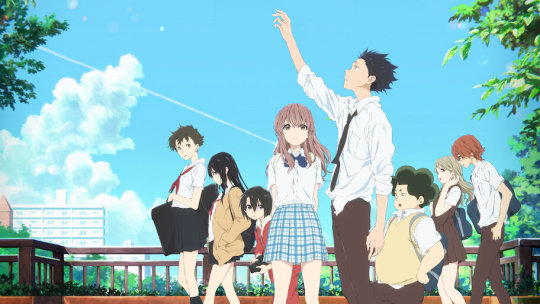
So I just spent the last three days (though mostly yesterday), watching three (kinda four?) different anime for my college course. The first episode of Naruto, "The Pain Arc" from Naruto Shippūden, the film Wolf Children, and the film A Silent Voice, and I have quite a lot to say about them.
Spoilers to the Pain Arc of Naruto and MAJOR SPOILERS for Wolf Children and A Silent Voice!!!
When I signed up to take a course revolving around analyzing anime, there were three popular anime that I had actually heard of that I immediately assumed would appear: Dragon Ball Z, Naruto, and Sailor Moon. Looking ahead at the schedule, I was two out of three (sorry Dragon Ball fans). So finally getting to watch one of those anime I heard so much about, (albeit, the first episode and a single arc), is something I am very happy about. Overall, I enjoyed what I saw. Naruto seems like a fun main character and Pain was an interesting villain with a cool power concept and deep origin.
As for Wolf Children, I will admit that at first, I had a bad feeling. I think it was that the beginning and opening premise reminded me a bit too much of what little I have seen and know about Twilight, something I was not a fan of at all. But I immediately got over my hesitations the moment Hana became widowed with the two children and the real plot began. After that, I enjoyed every part of this film. I especially loved how Yuki and Ame remained two sides of the same coin throughout the film but flipped which side they were on. Yuki at first being the wild child, constantly hunting and running around everywhere, embracing her wolf half, while Ame was the timid one who did not want to be a wolf at all. Then once they both started school, Yuki matured and started hiding her wolf half out of fear, while Ame stopped going to school and began to fully embrace his wolf half, living in the wild. The parallel character development and switch were brilliant, overall, this film felt like a great slice-of-life film of growing up, discrimination, and acceptance.
Then there is A Silent Voice. I am already feeling a bit choked up again just from writing this. I have so much to say about this film I can write an entire post of my thoughts on this film by itself and it would be enough to satisfy the writing requirement for this module's blog writing assignment, but alas. I felt so bad for both Nishimiya and Ishida the whole film. One of the themes for this film was self-hatred and regret. Ishida regrets everything that happened with Nishimiya in elementary school, everything he did, and he is a broken man from the fallout and doesn't truly recover until the very end. Nishimiya hates herself because of the pain and stress that she blames herself and her condition for bringing on to others. They both hate themselves so much that at pivotal points of the film, they attempt to take their own lives. It is such a heavy, yet, well-executed theme. Other characters besides Ishida and Nishimiya showcase other means of addressing their own self-hatred. Sahara chooses to run away and hate herself in silence, Kawai pushes her self-hatred away and convinces herself that she did nothing wrong and that she was a victim, and Ueno pushes all of her hate onto one person. Something else that I found very interesting about this film is how the two characters' self-hatred stems from some form of discrimination. The most obvious one is Nishimiya being deaf, meanwhile, Ishida hates himself because he was discriminated against for being a bully. Though I do not know how intentional it was, but I could not help but draw comparisons to cancel culture with what happened with Ishida. Especially when Yuzuru posted a picture of him online and called him a creep, and there subsequent talk in the rain.
To summarize my thoughts, I thought Wolf Children and what little I have seen of Naruto were both great and very well written! As for A Silent Voice, I highly recommend watching it if you haven't, probably my favorite anime that I have watched so far alongside A Place Further Than the Universe.
4 notes
·
View notes
Text
Naruto, Wolf Children, A Silent Voice
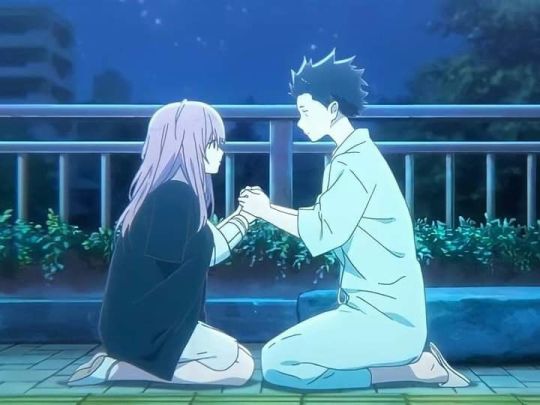
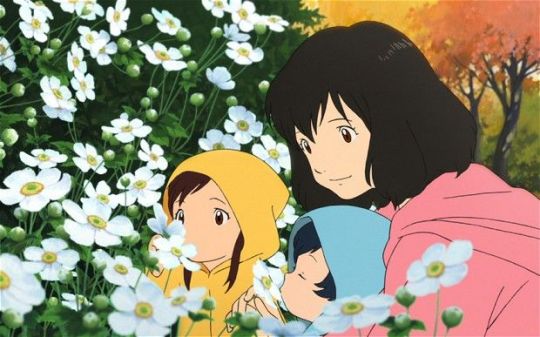
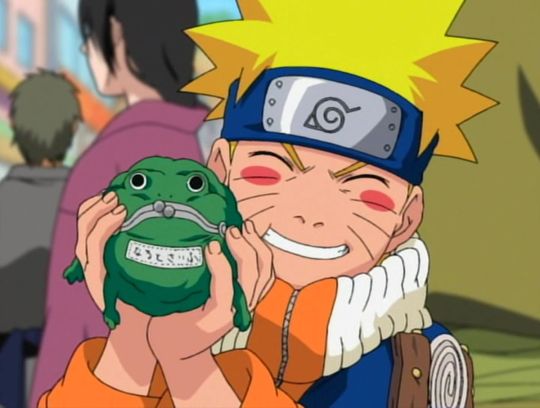
To begin, I just want to start off by saying how much I enjoyed watching these shows and movies. Even with the heavier topics of discrimination, I think it was interesting to see how each work approached the issue in a different way.
In Naruto, his main goal was to somehow assimilate back into society, by becoming a hokage. He felt that in order to end his discrimination that he had to prove himself to society, and to show them that he was not the demon they all thought he was. I think that this is a kind of backwards way to view discrimination, and one that could be harmful to those that are suffering. In a way, this show teaches young kids that in order to not be victimized by society they must be strong and change themselves to fit in and become the hero. That isn’t to say that the show itself is harmful, but its approach to the theme of discrimination could have a negative impact on its young audience.
Similar to Naruto, the movie Wolf Children depicts a family in which the children are both human and wolf. In a similar way, the children are forced to choose to be either human or dog, thus molding themselves to fit into a particular sector of society. The family even had to isolate themselves in the rural village to figure out their identities, and be apart from society. In this movie, society is demonstrated as a rigid, unchanging entity, and because of this those that don’t fit in must change themselves.
Finally, in the movie A Silent Voice, this idea of society being unchangeable is challenged. In order to try to make amends with Nishimiya, Ishida learns sign language, thus demonstrating society’s willingness to change to accommodate those that are discriminated against. It was this action that showed Nishimiya that Ishida did in fact change, and that he wasn't the bully he once was. I think that this movie really demonstrates that it is not the responsibility of those that are discriminated against to change themselves, but rather society needs to change.
1 note
·
View note
Text
Wow you really did a great job of explaining the show! Also, your personal connection made me think of some instances where a child or friend did something unexpected, and I think a lot of people can relate. It just shows that no matter how hard society tries to understand children, there are just some that slip through the cracks. That is a scary thing to think about, but I also think it is important to learn to deal with that fact. Your ideas were so unique and thoughtful!

I recently watched Shin Sekai Yori/From The New World and I must say, the premise around this series is probably the heaviest topic I have come across thus far.
MAJOR SPOILERS for Shin Sekai Yori (From The New World) and Discussion of a Serious and Heavy Topic Below!
I watched this show as part of a college course I am currently taking. Before watching this anime, there was a lecture about some of the context around this anime. Namely, the 1997 "Shonen A killings" in Japan. The name Shonen A is derived of Shonen, the Japanese word for boy, and the "A" is as in number one. The Shonen A killings were when an unnamed 14 year old boy brutally murdered two other children completely inexplicably and threatened to do it again. The lore and premise of Shin Sekai Yori is taking the fear caused by that tragedy to the extreme, having either a or the Shonen A be the first known person to have the Cantus abilities and use them to kill people. After more people like Shonen A, labeled "fiends", do the same, a society is eventually precariously formed to ensure no child ends up becoming another fiend, using genetic modification and creating exaggerated stories to keep them in line. After what happened with K (a telling continuation of the "A" part of Shonen A), even getting rid of any child that shows any possibility of psychological problems of any sort, whether it be isolation or callous disregard for the rules. With some of the major twists of the anime being how far this society has gone to protect the future, even mutating humans without powers into the genesis of the queerats.
I honestly do not know how to feel about this anime. I liked it and thought it was pretty good. But I was not expecting how dark the themes would be, and a lot of them brought back to mind something that happened to a friend of mine.
I had a friend who went to the same school as me in Elementary School that went to the same Middle and High School as I did; I even remember her saying one day that she thought I was the only person who went to the same three schools as her. That was until Senior year of High School, she moved to a different school. The next thing I heard from her was that she got arrested. It was at a prom or school dance, she was bored and not having a good time, so without thinking, she jokingly said on one of her social something along the lines of, "yeah, I'm shooting up the school". Now I will admit, while she did not mean what she said, she was in the wrong and should not have done that, and I do not condone what she did even though she absolutely did not mean it, it was in the end only a joke. But especially in the first few episodes, the comparisons I made from the anime to that were still there. The only difference was what the Tainted Cat did, and I too wonder where she is now, and knowing her, I hope she is doing well.
1 note
·
View note
Text
Shin Sekai Yori
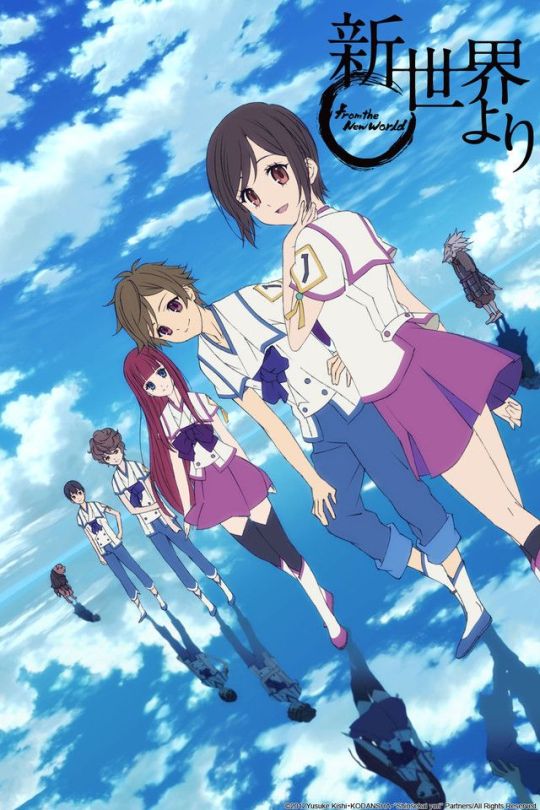
When going into this anime I didn’t really know what to expect. Then after the first scene of the boy ruthlessly murdering the people in the city, I was really caught off guard. It then clicked as I watched why we were assigned to watch this in the first place.
I would like to say that I enjoyed the show, but that would not be entirely true just based on the fact that I don’t love shows like that. However, I will say that it did a great job of creating suspense and making the viewer feel uneasy and anxious. What seemed like a cute story of a group of children at a magic school quickly turned into a thriller of disappearing children, demons, and monsters. It became clear that the children that did not pass the psychological and personality tests that the school gave out were eliminated, demonstrating the idea of a strict surveillance system. Then, when the children eventually found out about the history of their society, and how PK users used to rule, they began to understand the fear of their society. Although dramatized, this show demonstrates in a way how society today treats children, especially in the education system. Those that cannot keep up, or demonstrate tendencies of learning disabilities, are separated from the rest, and increasingly surveilled. They become part of a system, documented and watched over.
Just like in the show, this surveillance can be good, but it can also have negative effects. For one, children who need extra help or attention receive it, but they are deemed as being abnormal and isolated from the “normal” children. No matter how much society aims to understand the psychology behind children and their actions, there are just some cases where their actions do not make sense, like the case of Shonen A. I think that the show does a good job of calling out this fear that society has and shedding light on the idea of the “wild child”. It also proposes the idea of a life where this type of surveillance and punishment system is not necessary, which is not totally realistic but it does offer some hope that this system can be improved in the future.
5 notes
·
View notes
Text
YES!! I loved the show too! You bring up an interesting point about how this show can be seen as a "fortune-telling spyglass". I think it does offer a kind of warning for society about the dangers of technology, especially relevent with the creation of articifical intelligence. I think the scene with the murder in public also stuck out to me because with social media I feel people have started to become apathetic towards violence, and this scene offers commentary on that idea as well. We had very similar ideas, and I also thought this show was a great watch.
"Fools learn from experience, while the wise learn from history."
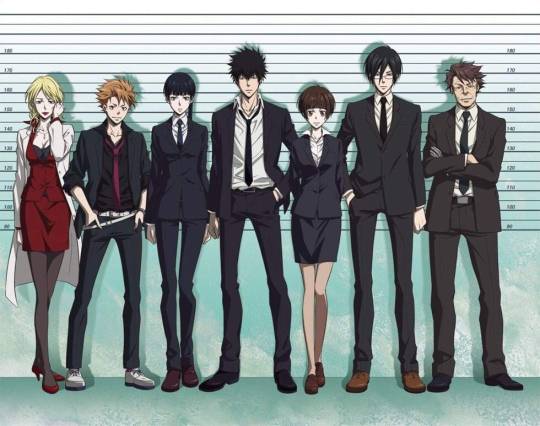
I know I said this before in my last post, but Psycho-Pass might be one of the best anime I've seen this YEAR. I may be biased because of my interest in everything sci-fi, but the anime's concept was executed perfectly. I also love the not-so-underlying theme of ethics in safety and the measures to maintain that safety in society. I think the anime as a whole serves as a fortune-telling spyglass that suggests a world that has a possibility of happening shortly. Over the past few decades, we have had significant technological advancements, which have also raised questions on how these innovations should be regulated, if even regulated at all. Right off the first episode, the viewers are thrust into this futuristic version of Japan, with holographic images and drones all around. The presence of drones all around already presents the idea that in this world, a higher power wants to keep its eye on everybody, everywhere. The first episode does a great job of introducing us to how society works while also keeping the plot moving forward. We learn that citizens are scanned and their mental state is evaluated by drones that the “higher power” controls. When evaluated, a system known as the “Siybl System” determines the risk/possibility of the person committing a crime or being a danger to those around them. This essentially means people can be reprimanded or targeted by authorities because of their thoughts or state of mind. Today, the thought of authorities doing this would be ludicrous, but this anime leaves us rethinking whether something like this is impossible. This very feature is what influences the main plots in Psycho-Pass. We see how society is affected by this feature when a scene of a man brutally murdering someone in public is met with a somewhat apathetic reaction from the crowd. It is later revealed that citizens don’t know how to react to something so absent because they had never had an idea that the act could be possible. Overall, Psycho-Pass isn't just an anime with sleek visuals and high-stakes action; the anime challenges the viewers to imagine and consider the ethics of a world that prioritizes order and safety over individual freedoms.
10/10 from me. See ya!
3 notes
·
View notes